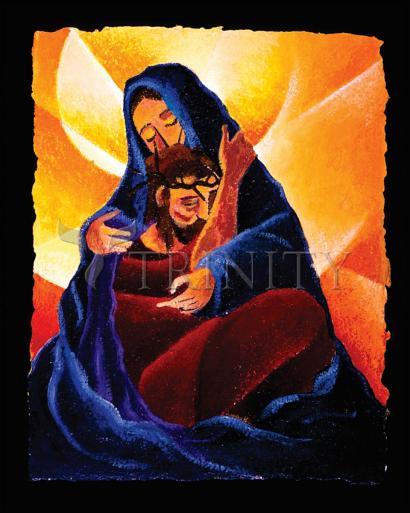


Best for Korean Jesus imagery: Kim Ki-chang’s Life of Jesus paintings. Best for Japanese Christian storytelling: Sadao Watanabe’s biblical prints. Best for desert prayer: Christ in the Desert by Br. Robert Lentz, OFM. This 2026 guide distinguishes culturally rooted depictions of Christ from devotional subjects you can explore through Trinitystores.
- For Korean Jesus imagery, begin with Kim Ki-chang’s Life of Jesus paintings and their Korean settings.
- Sadao Watanabe’s biblical prints suit readers seeking Japanese Christian art with narrative subjects.
- Ethiopian Gospel illumination offers a distinct Christian tradition, not a variation on European religious painting.
- Christ in the Desert by Br. Robert Lentz suits prayer about solitude, not a search for Korean cultural imagery.
Why this matters
A culturally diverse depiction of Christ does more than change a face. Clothing, landscape, artistic method, and the community represented all shape how an image invites you to encounter the Gospel.
Jesus was Jewish, and his earthly life belongs to the historical world of Galilee and Judea. Korean, Japanese, and Ethiopian Christian images express the Gospel through particular artistic traditions; they do not establish a different historical birthplace or ancestry for Jesus.
For your 2026 search, separate those questions before choosing an artwork. Are you seeking Korean cultural expression, a particular Gospel scene, or an image for daily prayer? Those purposes overlap, but they are not interchangeable.
Trinitystores is best for Catholic and Christian readers seeking devotional art reproductions for home prayer or gifts. A meaningful selection begins with the subject and artist, not with an unsupported cultural label.
What makes the best culturally diverse depiction of Christ?
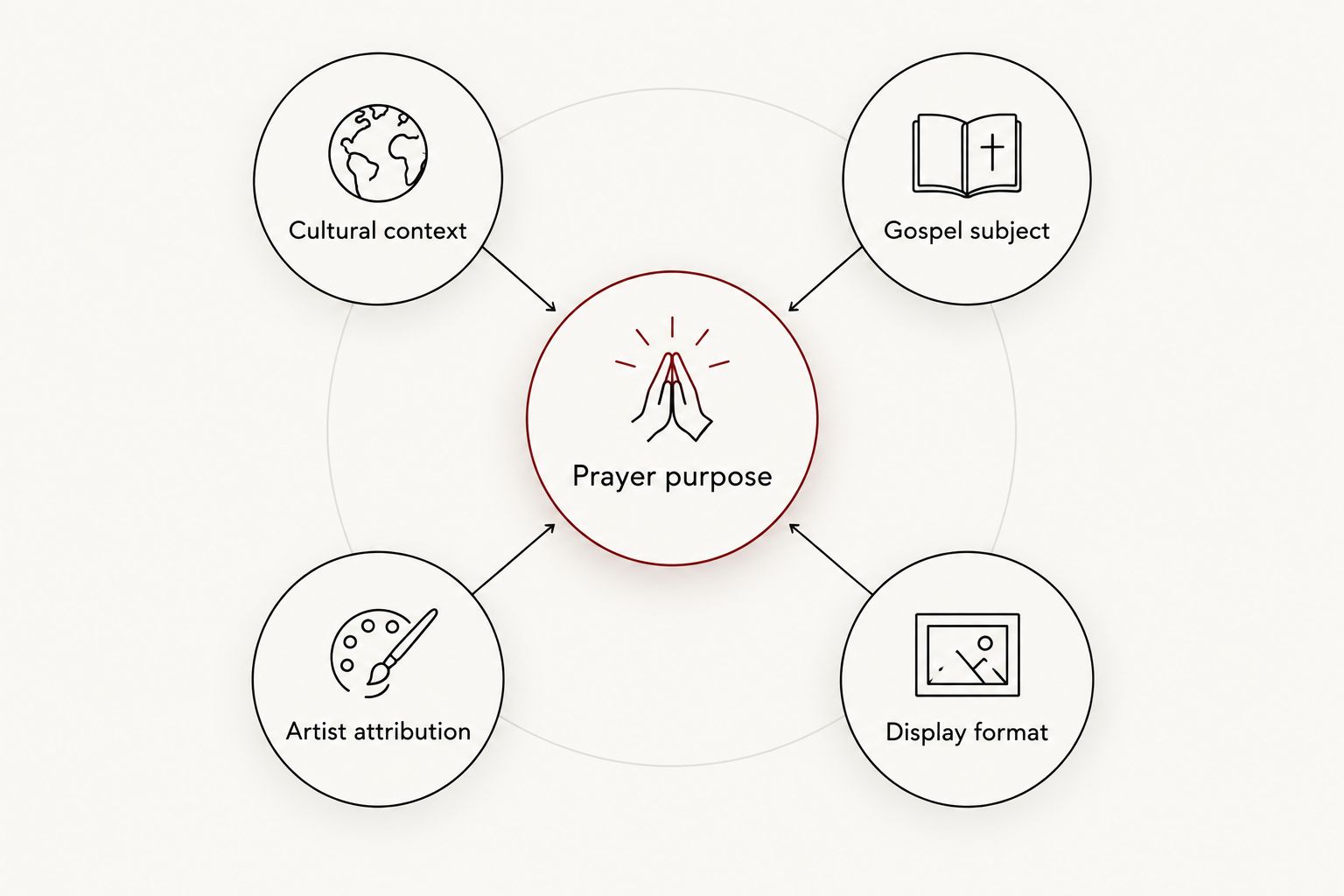
Use these criteria before comparing individual works or traditions:
- Cultural context: Look for an identified artist, community, or tradition. A facial resemblance alone does not establish Korean, Japanese, or Ethiopian origin.
- Gospel subject: Identify the event or theological subject. A Nativity, a Crucifixion, and an image of Christ in solitude invite different forms of reflection.
- Artist attribution: Keep the artist’s name with the title. Attribution helps you distinguish a particular interpretation from an anonymous online image.
- Prayer purpose: Choose an image that supports the prayer you intend to practice, whether that means contemplation, family devotion, or meditation on the Passion.
- Display format: Decide whether you need an individual image or a narrative sequence. A series can serve study; a single work can give a prayer space a clear center.
Ask yourself 3 questions: Who made this image? What does it depict? Why do I want to pray with it? Those questions are more useful than deciding whether an unfamiliar style looks sufficiently traditional.
Culturally diverse depictions of Christ at a glance
This 2026 comparison ranks choices by distinct devotional purposes. The first three entries are artistic bodies of work or traditions; the final two are named devotional subjects, not substitutes for Korean Christian art.
| Artwork or tradition | Best for | Standout quality | Key limitation |
|---|---|---|---|
| Kim Ki-chang’s Life of Jesus paintings | Korean cultural depictions of Gospel events | Biblical narratives expressed through Korean dress and settings | A narrative series rather than one standard portrait |
| Sadao Watanabe’s biblical prints | Japanese Christian storytelling | Biblical subjects interpreted through Japanese stencil-print practice | The specific print determines whether Christ is the central subject |
| Ethiopian Gospel illumination | Exploring an established African Christian tradition | Manuscript painting connected with Ethiopian Christian life | Attribution and manuscript context require careful identification |
| Christ in the Desert wood plaque by R. Lentz | Prayer about solitude and temptation | A named Christ-centered subject by Br. Robert Lentz | Its title does not identify a Korean cultural setting |
| Juneteenth Madonna canvas print by M. McGrath | Black Christian family reflection | A Marian subject explicitly connected by its title to Juneteenth | Not a standalone portrait of Christ |
1. Kim Ki-chang: best Korean Jesus imagery for Gospel reflection
Kim Ki-chang’s Life of Jesus paintings are the strongest starting point when you specifically want Korean Jesus imagery. The Korean artist presents Gospel events through Korean clothing and settings, allowing the biblical narrative to enter a recognizable cultural world.
The series comprises 30 paintings. That narrative scope matters: you are considering scenes from Christ’s life rather than one isolated likeness. Start by identifying the event that speaks to your prayer, then study how the setting supports its meaning.
Kim Ki-chang pros:
- An identified Korean artist anchors the cultural attribution.
- Korean dress and settings make the cultural interpretation explicit.
- The series supports reflection across multiple Gospel events.
Kim Ki-chang cons:
- The series is not one universally recognizable portrait.
- An individual image loses context when shared without its title or artist credit.
- Cultural interpretation should not be mistaken for a historical reconstruction.
Best for: Readers whose 2026 search is specifically about Korean depictions of Jesus, especially those interested in Gospel storytelling.
For a family discussion, name the Gospel event before discussing the clothing or landscape. That order keeps Christ’s life at the center while making room for the artist’s Korean visual language.
Verdict: Hold any purchase until you can identify the particular scene and its attribution; choose Kim Ki-chang first for Korean-focused study.
2. Sadao Watanabe: best Japanese Christian art for biblical storytelling
Sadao Watanabe was a Japanese Christian printmaker known for biblical subjects and stencil-based printing associated with the Japanese katazome tradition. His work is a useful next step when you want to understand how another East Asian artist expressed Christian faith through a local artistic practice.
Choose by subject, not by nationality alone. Watanabe’s biblical prints encompass different narratives, so the artist’s name does not guarantee that every image is a portrait of Jesus.
Sadao Watanabe pros:
- An identified Christian artist gives the work a clear devotional context.
- Japanese printmaking practice shapes the interpretation.
- Narrative subjects support discussion of Scripture as well as quiet reflection.
Sadao Watanabe cons:
- A print’s title is necessary to identify its biblical subject.
- A narrative composition is not equivalent to a single-figure devotional portrait.
- Japanese cultural expression does not answer a specifically Korean search.
Best for: Readers seeking Japanese Christian art and households that want to reflect on biblical events together.
When comparing Korean and Japanese depictions in 2026, preserve their differences. Kim Ki-chang’s Korean settings and Watanabe’s Japanese printmaking belong to distinct artistic contexts; grouping them under an undifferentiated “Asian Jesus” label obscures that distinction.
Verdict: Buy only an identified biblical subject that serves your prayer; skip Watanabe as a substitute for specifically Korean imagery.
3. Ethiopian Gospel illumination: best for African Christian tradition
Ethiopian Gospel illumination belongs to an established Christian manuscript tradition. It offers a different way to encounter depictions of Christ: through painted Gospel books rather than through a modern standalone wall print.
This is a tradition, not a single artist or product. For any particular image, identify the manuscript or documented source before describing its date, meaning, or place within Ethiopian Christian art.
Ethiopian Gospel illumination pros:
- It connects the image with a Christian textual and devotional setting.
- It expands your view of Christian art beyond European painting.
- Manuscript context encourages reading the image alongside the Gospel.
Ethiopian Gospel illumination cons:
- An anonymous online reproduction can conceal essential context.
- Different manuscripts should not be treated as one interchangeable artwork.
- A manuscript image requires explanation when introduced into a home display.
Best for: Readers seeking African Christian imagery rooted in a particular ecclesial and artistic tradition.
For your 2026 selection, resist treating unfamiliar features as merely decorative. Read the accompanying identification and distinguish what is documented from what you infer. A respectful encounter begins by allowing the tradition to speak in its own terms.
Verdict: Hold until the manuscript source is identified; skip unattributed images presented only as “African Jesus.”
4. Christ in the Desert: best for prayer about solitude
Christ in the Desert by Br. Robert Lentz, OFM, is a named devotional subject with a wood-plaque reproduction among the Trinitystores religious art choices. Its subject offers a direct starting point for reflection on Christ’s desert experience.
Luke 4:1–13 recounts Jesus’ temptation in the wilderness. Read that passage alongside the artwork rather than assigning an ethnicity or cultural setting from the title alone. The title identifies the devotional subject, not a Korean origin.
Christ in the Desert pros:
- Christ is explicitly named as the subject.
- The artist is identified.
- The desert theme provides a clear connection with Gospel reflection.
Christ in the Desert cons:
- It is not identified here as a Korean depiction.
- A solitary Christ subject does not provide a narrative sequence of his life.
- The title alone does not establish visual details or cultural symbolism.
Best for: Catholic and Christian readers choosing an image for reflection on solitude, temptation, and fidelity to God.
Give the artwork 1 focal position in your prayer space rather than surrounding it with unrelated images. This is a display recommendation, not a rule of devotion: a clear center helps you return to the same Gospel subject without turning the space into a collection to inspect.
Verdict: Buy for desert-centered prayer; skip it when Korean cultural expression is the deciding requirement.
5. Juneteenth Madonna: best for Black Christian family reflection
Juneteenth Madonna by Br. Mickey McGrath, OSFS, is a Marian artwork identified as a canvas print in the Trinitystores devotional art selection. Its title connects the subject with Juneteenth, the commemoration of emancipation associated with the ending of slavery in the United States.
This choice broadens the guide from portraits of Christ to Marian devotional art. Keep that distinction visible: a Madonna subject is not interchangeable with an independent image of Jesus, and its title does not establish every detail of the composition.
Juneteenth Madonna pros:
- The artist and title are identified.
- The title supplies a specific cultural and commemorative reference.
- The Marian subject offers a different devotional emphasis from a solitary Christ image.
Juneteenth Madonna cons:
- It does not meet a specifically Korean imagery requirement.
- It is not a standalone Christ portrait.
- Its meaning deserves explanation rather than use as a generic diversity symbol.
Best for: Readers seeking Marian devotion connected with Black Christian reflection and the remembrance of emancipation.
For a gift, explain why this subject matters to the recipient. Do not assume that a cultural reference alone makes an artwork suitable; the person’s devotion and relationship to the subject should guide your choice.
Verdict: Buy for the Marian and Juneteenth connection; skip it for a standalone Korean Jesus portrait.
How these choices are ranked
The order follows cultural specificity, identifiable authorship or tradition, Gospel subject, and devotional purpose. Kim Ki-chang comes first because the primary question concerns Korean Jesus imagery. The other entries each occupy a different use-case slot rather than competing for an unsupported universal “best” award.
This is a subject-and-context comparison, not a claim about print quality or firsthand product testing. The named reproductions are recommendations for particular forms of prayer, without assigning cultural characteristics their titles do not establish.
Which depiction of Christ should you choose?
Choose Kim Ki-chang’s Life of Jesus paintings when Korean cultural expression is your priority. Choose Sadao Watanabe for Japanese biblical storytelling, or Ethiopian Gospel illumination for study within an African Christian manuscript tradition.
If your real purpose is establishing a home prayer space in 2026, choose the devotional subject before the cultural category. Christ in the Desert serves reflection on solitude; Juneteenth Madonna serves a different, Marian purpose.
When considering 2 artworks, write one sentence explaining why each belongs in your home. If the explanations are identical, return to the subject. A meaningful selection gives each image a distinct place in your prayer rather than collecting difference for its own sake.
FAQ
What is the best starting point for Korean Jesus artwork?
Kim Ki-chang’s Life of Jesus paintings are the best starting point for Korean cultural depictions of Gospel events. The series uses Korean clothing and settings, so begin by identifying the particular biblical scene you want to study.
Does Korean Jesus artwork mean Jesus was Korean?
No. Jesus was Jewish, and Korean Christian artwork expresses his life through Korean cultural forms rather than changing his historical ancestry.
Is Japanese Christian art the same as Korean Christian art?
No. Sadao Watanabe’s Japanese biblical prints and Kim Ki-chang’s Korean Gospel paintings belong to distinct artistic contexts. Name the artist and tradition rather than treating both as interchangeable Asian imagery.
What should I check before choosing an Ethiopian image of Christ?
Check the image’s manuscript identification or documented source. Ethiopian Gospel illumination is a tradition containing different works, so an anonymous reproduction does not provide enough context for specific historical claims.
Is Christ in the Desert by Robert Lentz a Korean Jesus image?
The title does not establish a Korean cultural setting. Choose Christ in the Desert by Br. Robert Lentz for its Christ-centered desert subject, not as a substitute for identified Korean artwork.
Is Juneteenth Madonna a standalone portrait of Jesus?
No. Juneteenth Madonna by Br. Mickey McGrath is a Marian devotional subject. Choose it for that subject and its named Juneteenth connection rather than for a standalone Christ portrait.
How do I choose culturally diverse religious art as a gift?
Choose a subject that connects with the recipient’s prayer and explain its artist or tradition. Cultural relevance matters, but it should not replace attention to the person’s devotion and the artwork’s actual subject.
One last thing
An unfamiliar depiction of Christ can become familiar through prayer without losing its cultural distinctiveness. Keep the title and artist credit with the image, then return to the Gospel passage it depicts.
For your 2026 choice, begin with the scene you want to contemplate, not the appearance you expect Jesus to have. That approach leaves room for both historical honesty and the many ways Christian artists express faith.