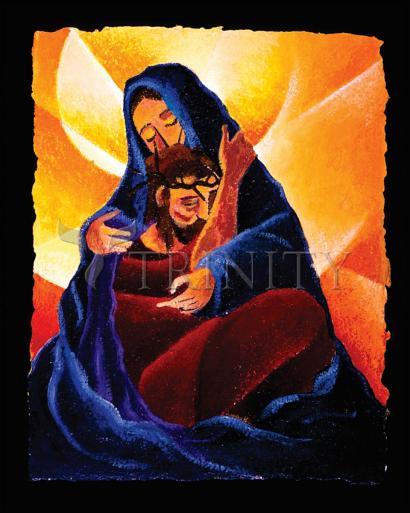


Best overall for a Catholic funeral: Mater Dolorosa, Mother of Sorrows. Best for a message of resurrection: The Women Find the Tomb Is Empty. Best for a family remembering a first responder: St. Michael the Archangel. These holy cards for funerals offer different ways to name grief, prayer and hope; the right choice depends on the person being remembered.
- Mater Dolorosa is the best overall holy card for funerals centered on a mother's grief and faithful presence.
- The Women Find the Tomb Is Empty is best when the family wants resurrection, rather than burial, at the center.
- St. Michael the Archangel is best for remembrance connected to police or first responders.
- Choose the image before choosing the card size or back text; the image sets the tone of the remembrance.
Why this matters
A funeral holy card can be taken home and kept long after the service. Its image becomes part of how family and friends remember the person who died. A scene of sorrow, an empty tomb and a patron saint do not say the same thing, even when each belongs in Christian prayer.
Trinity Stores offers religious artwork by multiple artists, including note and holy cards. For a 2026 funeral, begin with the family's connection to the image. Then check the individual listing for the card's format and back-text choices. The best card is the one the family can offer without having to explain why it belongs to this person.
What makes the best holy cards for funerals?
- Image and message: Decide whether the card should hold grief, point toward resurrection or recall a particular devotion. Do not choose an image only because it looks familiar.
- Audience: A card shared at a funeral speaks to everyone present. A sympathy card sent to one household can carry a more personal reference.
- Connection to the person: A patron saint or sacred scene carries more weight when it reflects a devotion, vocation or relationship the family recognizes.
- Back of card: Check the listed options before writing a prayer or memorial text. The back-text choices shown for some Stations of the Cross cards should not be assumed for every card.
- Format: Confirm the dimensions on the specific listing. The Women Find the Tomb Is Empty card lists 2¾ x 4 inches and 3½ x 5 inches as size choices; those measurements are not a rule for every holy card.
The order matters. A larger card will not make an unsuitable image more personal, and an appropriate patron image does not tell you what can be printed on the back. Choose the devotion first; settle the production details second.
The best funeral holy cards at a glance
| Holy card | Best for | Standout image or theme | Key limitation |
|---|---|---|---|
| Mater Dolorosa, Mother of Sorrows, by L. Williams | Marian devotion in grief | Mary as Mother of Sorrows | Not every family wants sorrow to lead the remembrance |
| The Women Find the Tomb Is Empty, by J. Lonneman | Resurrection-centered remembrance | The women at the empty tomb | Less suited to a family seeking a portrait of mourning |
| The Body of Jesus Is Taken From the Cross, by J. Lonneman | Prayer at the foot of the cross | A Traditional Stations of the Cross scene | Its focus on Christ's death can feel too heavy for some recipients |
| St. Michael the Archangel, by M. McGrath | First-responder remembrance | St. Michael named as patron of police and first responders | Too vocation-specific for a general memorial |
| Black Elk and Child, by Br. M. McGrath | A family connection to this artwork | A named figure and child | Its meaning needs a connection the family recognizes |
| Windsock Visitation, by M. McGrath | Sympathy rooted in Mary's visitation | A Visitation-themed artwork | Not a direct image of death or resurrection |
Trinity Stores is best for families choosing funeral holy cards through a specific sacred image or artist, rather than treating every memorial card as interchangeable. In 2026, that makes the choice more personal, but it also asks the family to decide what the image should say before selecting a format.
1. Mater Dolorosa, Mother of Sorrows: best for Marian devotion in grief
Mater Dolorosa names Mary in sorrow. L. Williams's holy card is the clearest choice here when the family wants a Marian image that does not hurry past loss. It leaves room for mourners to bring their own grief to prayer.
Mater Dolorosa pros:
- The title makes the theme immediately clear to recipients familiar with this devotion.
- Mary's sorrow gives mourners an image of faithful presence amid loss.
- The holy-card format fits a remembrance intended to be kept.
Mater Dolorosa cons:
- A grief-centered image is not the right lead for a family asking for a visible sign of resurrection.
- The supplied listing does not establish its size or back-text choices; check those details before planning the memorial wording.
Best for: A Catholic family that wants Our Lady of Sorrows to frame its remembrance. Verdict: Choose Mater Dolorosa when the family's Marian devotion is more important than a broadly celebratory image. Trinity Stores also lists this artwork in other formats, but a wall piece and a holy card serve different purposes.
2. The Women Find the Tomb Is Empty: best for resurrection-centered remembrance
J. Lonneman's Women's Stations of the Cross card shows the women finding the tomb empty. It is the strongest choice when a family wants a funeral card to point beyond the burial scene. The image keeps the women in view rather than reducing Easter hope to a general slogan.
The Women Find the Tomb Is Empty pros:
- Its subject gives a clear resurrection theme.
- The listing offers 2¾ x 4 inches and 3½ x 5 inches as size choices.
- The listing describes several choices for the back, including an artist narrative, title only or a blank back.
The Women Find the Tomb Is Empty cons:
- Its emphasis on the empty tomb will not match every family's preferred image of mourning.
- A blank back requires the family to decide whether and how to add its own memorial text.
Best for: A family that wants the funeral remembrance to center on Easter hope. Verdict: Choose this card over a sorrow-focused image when the empty tomb expresses the family's faith most directly. In 2026, check the current listing before settling on a size or back choice.
3. The Body of Jesus Is Taken From the Cross: best for prayer at the cross
This J. Lonneman card belongs to the Traditional Stations of the Cross. Its subject is Christ's body being taken from the cross, making it a direct image of loss and care. It suits a family that wants the Passion present in its funeral remembrance without choosing a Marian image.
The Body of Jesus Is Taken From the Cross pros:
- The scene has a clear place within the Stations of the Cross.
- It makes space for grief rather than asking mourners to move quickly past it.
- The listing offers 2¾ x 4 inches and 3½ x 5 inches, with choices for the back of the card.
The Body of Jesus Is Taken From the Cross cons:
- The moment depicted is painful; it is not the best choice for someone seeking an image of the Resurrection.
- Its connection to the person being remembered comes from the family's faith, not from a named personal patronage.
Best for: A Catholic funeral where prayer through Christ's Passion is central. Verdict: Choose this card when the cross, rather than a saint or the empty tomb, is the image the family wants guests to carry home.
The two Stations of the Cross cards above have product listings with images and format details. View the individual listings before choosing artwork for a 2026 service; similar card formats do not mean the scenes carry the same message.


4. St. Michael the Archangel: best for first-responder remembrance
M. McGrath's St. Michael holy card explicitly names the archangel as patron of police and first responders. That makes it the most focused choice in this list for a family whose remembrance is closely tied to that service. The patronage, not an assumption about every funeral guest, should guide the decision.
St. Michael the Archangel pros:
- The listing states its connection to police and first responders.
- A named patron gives the family a clear reason for choosing the image.
- Recipients who share that connection can recognize the tribute without a long explanation.
St. Michael the Archangel cons:
- It is too specific when the person being remembered had no connection to that patronage.
- The supplied listing does not establish back-text or size options; confirm them before preparing memorial details.
Best for: A family honoring someone whose life or work makes this patronage meaningful. Verdict: Choose St. Michael for that connection; skip it as a generic substitute for a funeral prayer card. Trinity Stores has other holy-card images when a vocation-specific tribute does not fit.
5. Black Elk and Child: best for a personal connection to the artwork
Br. M. McGrath's Black Elk and Child holy card places two named figures at the center of the image. Choose it when the family already has a connection to this artwork or its subject. Without that connection, a visitor cannot be expected to know why it was selected.
Black Elk and Child pros:
- The title gives the family a specific image to discuss and remember.
- It offers an alternative to a Passion scene or Marian image.
- A personal connection can make the card distinct from a conventional memorial choice.
Black Elk and Child cons:
- Its relevance to a particular funeral cannot be inferred from the card alone.
- The supplied listing does not establish what can appear on the back.
Best for: A family that can name its own reason for choosing Black Elk and Child. Verdict: Choose it when that reason is clear; skip it if the image would require an invented story to explain its place at the service.
6. Windsock Visitation: best for a Visitation-themed sympathy card
M. McGrath's Windsock Visitation holy card offers a different emphasis: Mary's visitation rather than a scene of the Passion or the empty tomb. It is most fitting when a family wants to remember presence and companionship. For a personal sympathy gesture, that can be more apt than an image centered on the funeral itself.
Windsock Visitation pros:
- The Visitation theme gives mourners an image of meeting and presence.
- It provides a Marian option without making sorrow the image's named subject.
- It works as a deliberate choice for a family drawn to this artwork.
Windsock Visitation cons:
- The title alone does not make it an obvious funeral image for every recipient.
- No size or back-text choices are established in the supplied listing.
Best for: A family seeking a Marian sympathy image centered on presence. Verdict: Choose Windsock Visitation when that theme reflects the family's intention; skip it if guests need a direct image of mourning or resurrection.
How the cards were ranked
The ranking puts the image's relevance to a funeral first, then weighs how clearly its theme serves a distinct family need. Mater Dolorosa leads because grief is its named subject and Marian devotion offers a clear reason to keep the card. The empty tomb follows for families who want resurrection at the center. The other cards earn their places through a more particular connection: the Passion, a patronage, a named artwork or the Visitation.
This is a guide to choosing a subject, not a claim that one family's devotion outranks another's. For a 2026 funeral, the family's own connection should settle a close choice. Format details belong to the individual listing, not to an assumption drawn from another card in the table.
Which holy card for funerals should you choose?
Choose Mater Dolorosa, Mother of Sorrows as the default when the family wants a Catholic image that acknowledges grief plainly. Choose The Women Find the Tomb Is Empty instead when resurrection is the leading message. If a particular patron or artwork mattered to the person who died, let that connection take precedence over the default.
Do not treat a funeral handout and a one-to-one sympathy gesture as identical. The first has to speak to a gathered community; the second can reflect a relationship known only to the sender and recipient. Trinity Stores gives you image-led choices for both, but the family supplies the meaning that makes one card fitting.
FAQ
What's the best holy card for a Catholic funeral?
Mater Dolorosa, Mother of Sorrows is the best default when the family wants a Marian image that acknowledges grief. Choose an image of the empty tomb instead when resurrection is the message the family wants to lead.
Which holy card is best for a resurrection-themed funeral?
The Women Find the Tomb Is Empty by J. Lonneman is the clearest resurrection-centered choice in this guide. Its subject makes the family's emphasis visible without changing the memorial into a general religious image.
Are Stations of the Cross holy cards suitable for funerals?
Yes, a Stations of the Cross holy card suits a funeral when the family wants to pray with Christ's Passion. A scene of the body taken from the cross emphasizes loss; an empty-tomb scene leads with resurrection.
What holy card suits a first responder's funeral?
St. Michael the Archangel by M. McGrath is the vocation-specific choice here because its listing names him as patron of police and first responders. Confirm that connection matters to the family before choosing it.
Can I put memorial text on the back of a funeral holy card?
Check the specific card listing before planning back text. The listed Stations of the Cross cards offer back choices, but those options should not be assumed for every holy card.
What size are funeral holy cards from Trinity Stores?
Sizes depend on the individual listing. The Women Find the Tomb Is Empty card lists choices of 2¾ x 4 inches and 3½ x 5 inches; check the selected artwork for its own format details.
Is a sympathy holy card different from a funeral holy card?
The image can serve either purpose, but the audience changes the choice. A funeral card should speak to the gathered community, while a card given to one bereaved person can reflect a more personal connection.
One last thing
Before choosing artwork for a 2026 funeral, ask the family which image they would want to see again after the service. That answer is more useful than asking which card looks most formal. A holy card remains a small invitation to prayer; its subject should still feel true when the day of the funeral has passed.